
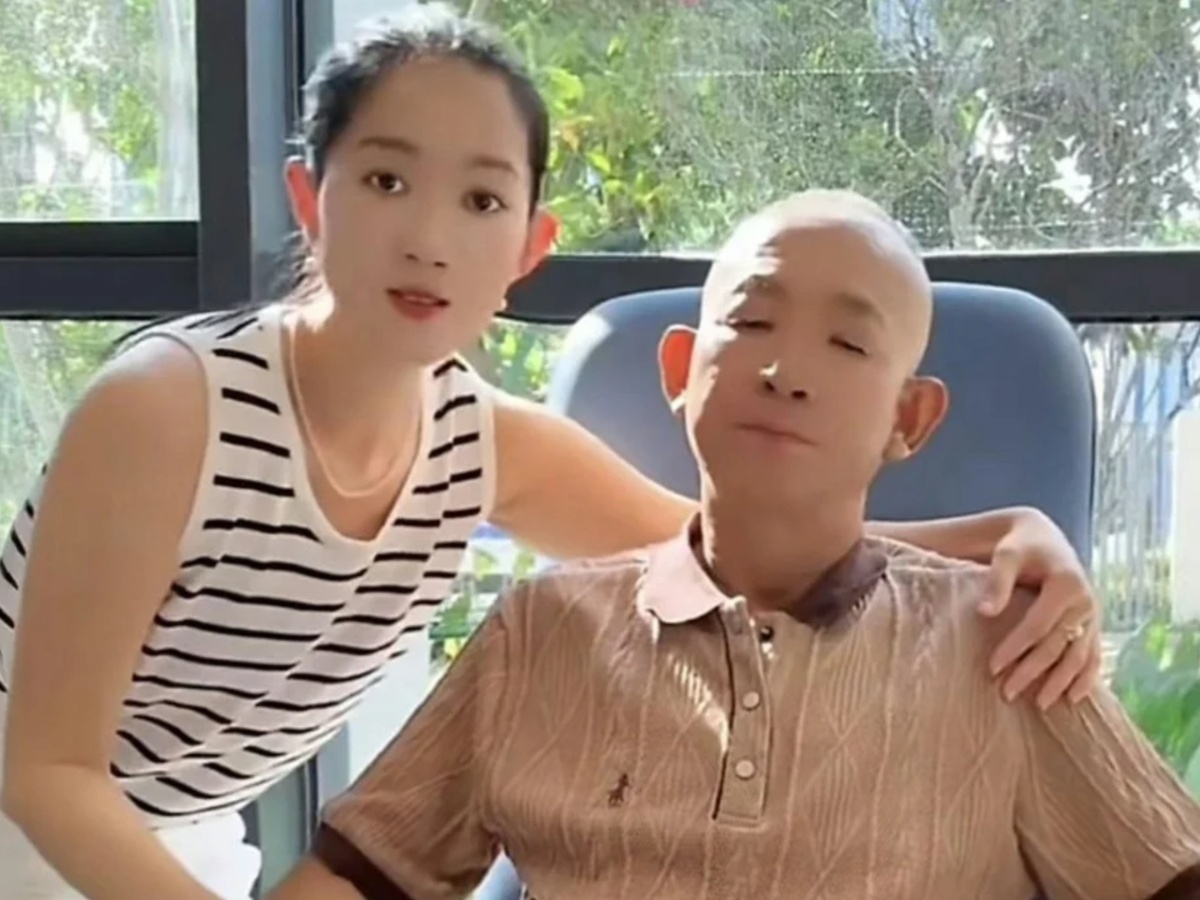

A patient suffering from end-stage cancer, Mr. Hou, who hails from China, is 61-year-old, and runs a business firm. There has been a great furore created regarding his will in which he transferred all his assets worth 300 million yuan (₹405 crores), including three coastal villas in Sanya, two business firms, ownership of a resort hotel, and 27 percent shares of the yacht firm and 47 million yuan in cash deposits, to his second wife Mrs. Liyuan who is 33 years old. This move was taken by him because he was suffering from end-stage lung cancer, and Mrs. Liyuan had been providing him emotional strength and caring for him.
Hou and Liyuan began dating when she served as an accounting assistant in his logistics company. Liyuan was only 21 years old then. Their relationship blossomed and they tied the knot in 2016. Soon after that, they had a son who is currently five years old.
According to Liyuan, she has undergone many changes. From being carefree, she became more responsible. She also credited her husband for her own development both personally and professionally. Hou helped her become a clubhouse manager in Beijing from being an accounting assistant.
But their marriage was not accepted by others right from the start because some of them were doubtful about the age difference between the two. Some even accused them of marrying each other because of money.
It is claimed that Hou’s children were concerned with inheritance questions. In consequence, the two made a prenuptial agreement before marrying. This showed their initial disagreement.
Nevertheless, problems started emerging again following Hou’s health problems. Hou chose to leave his fortune, and this caused further disagreement between him and his former wife as well as his children who objected to his decision.
His choice became widely known. It raised numerous discussions among people.
The couple made the announcement regarding the advanced lung cancer of Hou on their blog post last November. Liyuan recorded everything that she experienced while taking care of Hou.
Hou underwent five rounds of chemo sessions. Regardless of what difficult experiences they had to go through, Liyuan remained at his side throughout the ordeal. She was the caregiver of Hou during his critical moment.
In the end, Hou transferred all his wealth to Liyuan. It seemed that she was his spiritual strength. He considered it necessary to secure the future of his wife and son.
The inventory included:
To refute these criticisms, Liyuan made an appearance in a video where she dismissed their marriage as purely being about money. Instead, she stressed their emotional connection.
She added, “Everyone criticized our marriage as being a sandcastle; but people do not know that my husband lifted me up during my process of growth from childhood innocence to maturity and gave me the love that a man could give to a woman.”
She explained how she had benefited from Hou and mentioned how she expanded her horizons because of him.
These reasons notwithstanding, Hou’s ex-wife and his offspring still opposed this move. They contested this transaction. They claimed that inheritance ought to be limited to biological offspring.
This matter thus posed some legal and moral issues. This issue further revealed the complexities within families.
The matter immediately became viral. In China, the public opinion was polarized. Some people agreed with Hou’s actions, while others were supportive of his children’s.
A user commented, “People are right saying that if you marry another person after your spouse, you end up marrying their relative.” It is clear that such a reaction was based on mistrust toward the step-family.
Another person held a contradictory opinion. The user commented, “It is natural for someone to leave property for those who truly care for them.” Here the emphasis was made on caregiving.
The above comments proved the emotional background of inheritance controversies.
Therefore, the dilemma created by Hou was that of a difficult decision between recognizing the virtue of taking care of one’s parents when they become old and respecting the cultural values of inheritance within the family context.
Moreover, the dispute raised the problem of conflicting emotions and legal responsibility. It also raised the problem of how profits affect family relations.
However, today, the decision rendered by Hou remains controversial. Additionally, the decision can be taken as a representation of modern inheritance disputes within China.