
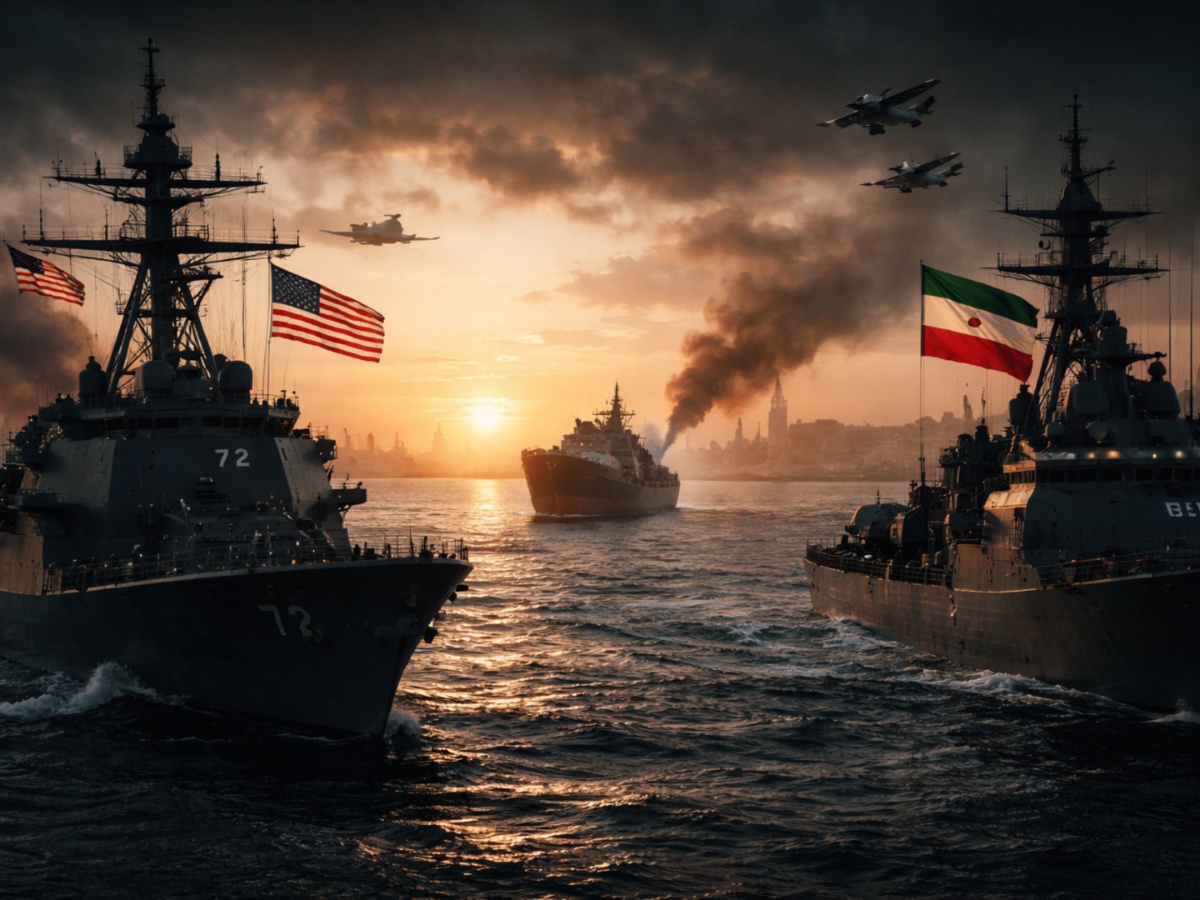

The US-Iran ceasefire marks an end to a six-week conflict that disrupted the stability in West Asia, putting the entire region at the verge of escalation. The temporary ceasefire agreement came only hours after the United States imposed a deadline for its attack against Iran, which would be unprecedented in its scale and scope. The two parties immediately proclaimed themselves victorious. Simultaneously, further diplomatic negotiations proceeded, internal political pressures continued building up, and uncertainty prevailed in the area. The present study analyzes how the ceasefire was achieved, why both sides consider themselves victorious, how US partially accomplished its goals, and why time played a significant role for Donald Trump in this process.
The ceasefire came into effect late Tuesday after an entire day of rising tensions and military activities. In a previous development, President Donald Trump of the United States had made a tough ultimatum to Iran. He had asked Iran to open the Strait of Hormuz. Failure to do so would lead to massive attacks on Iranian civilian infrastructure facilities. This includes energy and transportation systems.
Military actions were stepped up as well. Attacks by US and Israeli forces were made against the country’s critical infrastructure. These include railway bridges, highway bridges, an airport, and a petrochemical plant. The US forces also attacked Kharg Island, which serves as a major export port for Iranian oil products.
However, diplomacy was not entirely on hold. The Prime Minister of Pakistan, Shehbaz Sharif, invited representatives from both the countries to meet in Islamabad. This was done to further their interests.
Eventually, both decided to enter into a mutually binding commitment. Iran would call off the blockade in the Strait of Hormuz and facilitate safe passage of merchant ships through it. In response, the U.S. agreed to stop attacks on Iran. Trump termed it as a “double sided CEASEFIRE.”
This was confirmed by Iran’s Foreign Minister, Abbas Araqchi. According to him, if there were no attacks, then the country would call off its defensive measures as well. There would be coordination for facilitating safe passage during the ceasefire as well. Iraq’s Islamic Resistance too declared the suspension of their activities for two weeks.
The two countries declared it a victory almost immediately. Trump himself termed it a “total and complete victory.” The president made the same claims in many of his posts and statements. He even wrote on Truth Social, declaring it “A big day for World Peace.”
Trump also talked about some movement towards an overarching deal. According to the president, talks had progressed considerably according to a 15-point plan, where most points have been negotiated. When talking to AFP, he said the United States had won “100 percent.”
This was followed by the US government making similar claims. Karoline Leavitt, press secretary of the White House, claimed it to be a victory for America because the country was successful in putting maximum pressure with the help of its military force. She also added that they had exceeded their goals within 38 days.
But, the case of Iran was an exception. In its view, the US government surrendered. In its view, Iran had managed to accomplish almost all of its objectives of war. Furthermore, Iran stated that America was witnessing a historic loss.
The officials of Iran maintained that the US had accepted the 10-point program proposed by Iran. The list included relief from sanctions, compensation, the pullout of US troops, and a United Nations resolution. It also contained recognition of the right of Iran to enrich uranium.
Casualties were massive due to the conflict. In all, more than 5,000 deaths occurred in about a dozen countries. Over 1,600 civilians lost their lives in Iran. The US believed that the mission had degraded Iran’s military capabilities through targeted attacks on its infrastructure and even killed its senior leaders.
This was the reason behind the US declaring its victory. On the other hand, Iran’s government and leadership survived the attacks. In addition, its regional allies continued functioning.
Iran took advantage of its resilience in this case. It portrayed itself as a resistant power, which accepted a ceasefire without compromising on its demands.
The issue of domestic pressure was very important at this point in time. The timing of the conflict occurred at a time when oil prices were high in the US. People also became increasingly dissatisfied with the situation. The approval rates of President Donald Trump started falling significantly.
In addition, there were upcoming midterm elections, and people did not like what was happening because polls showed that most of them were against the war. This is why the ceasefire became a way out. It enabled the Trump administration to switch tactics and negotiate.
Finally, Trump was accused of poor leadership skills by his opponents and even threatened impeachment. All of this added up to the need for negotiations with Iran.
The country of Iran was facing tough economic times as well. Economic sanctions and war affected its economy negatively.
Ceasefire is applicable only for the fighting between the US and Iran forces. Nevertheless, ceasefire does not involve the entire region. Israeli support was granted for this short break. Nevertheless, Israeli authorities stressed that ceasefire does not apply to Lebanon.
There were indications in the reports about continuing strikes in Lebanon. There were artillery strikes in the southern region of Lebanon. Air strike hit a hospital and caused casualties.
Thus, the doubts continue as the ceasefire is viewed as an opportunity to develop trust. Some US officials worried that Iran would re-group due to the break.
Next two weeks will play critical role as negotiations will take place in Islamabad to build an effective agreement. The talks will aim at finding ways to bring together US’ 15-point plan and Iran’s 10-point plan.
Though ceasefire stopped the fighting, the main issues are still unresolved.