
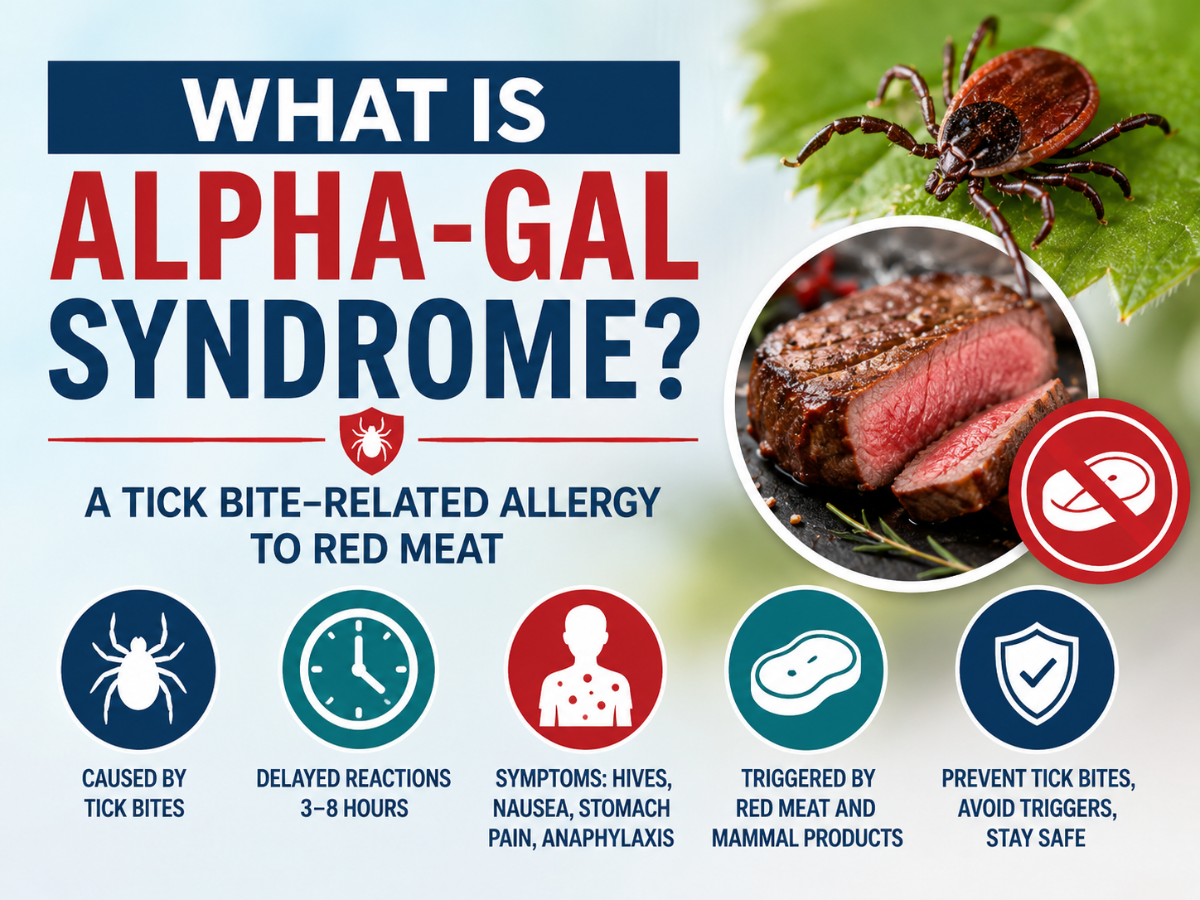

Alpha-Gal Syndrome (AGS), a rare food allergy, has drawn more attention lately. AGS can cause symptoms several hours after consuming red meat or other products derived from mammals. In contrast to the majority of food allergies that cause reactions right away. If you have knowledge about the condition, this may be linked to tick bites. It can significantly affect a person’s diet & lifestyle. Here are a few causes, symptoms, diagnoses, and preventions of Alpha-Gal syndrome essential for managing the condition effectively.
An allergic response to a sugar molecule called galactose-α-1,3-galactose, or alpha-gal, is known as alpha-gal syndrome. The majority of mammals, including sheep, deer, pigs, and cows, contain this molecule. Alpha-gal-containing products may cause an allergic reaction in people with AGS.
Most researchers think AGS starts after people get bitten by certain tick types. During a tick bite, alpha-gal can enter the bloodstream and nudge the immune system into making antibodies. After that initial sensitisation, the body may react later when alpha-gal comes again through food or maybe certain medical products.
But one of the strangest parts of alpha-gal syndrome is its timing. While most other food allergies, symptoms show up within minutes. But with AGS, the symptoms tend to come around three to eight hours after eating. Because of that delayed start, identifying the real cause can become a little tricky, like, people may not connect what they ate with what happens later.
Alpha-Gal syndrome sufferers are frequently advised to stay away from the following:
Dairy products may also cause reactions in certain people, though sensitivity varies.
The following symptoms could be mild to severe:
In extreme situations, prompt medical care might be necessary.
AGS is more common in people who spend time in tick-prone areas. Hikers, campers, hunters, farmers, forestry workers, and residents of rural or wooded areas are among those who are more vulnerable. The risk of developing an alpha-gal sensitivity may rise with repeated tick bites.
Doctors usually figure out AGS by looking at a patient’s symptoms, what they’ve eaten, and whether there was any tick exposure. Blood testing for alpha-gal-specific antibodies is often used to back up the suspected diagnosis. A lot of the time, people end up being sent to an allergy specialist for more careful follow-up and kind of a second opinion.
Yes, definitely. Some drugs and medical items may include components that come from mammals. If you are one of the individuals with AGS, you should inform healthcare providers about your condition before taking new medications or undergoing medical procedures.
As of now, there’s no real cure for alpha-gal syndrome. It’s kind of the whole situation. This treatment is mostly about staying away from foods and products that have alpha-gal in them. If someone is more at risk for intense, serious reactions, their doctor may prescribe an epinephrine auto-injector. It is important they follow the doctor’s advice very closely, even when things feel fine for a bit.
Prevention is mainly about stopping tick bites before they happen. That’s the most straightforward way to lower the risk of developing AGS. Helpful steps include:
Alpha-Gal Syndrome sort of is a special kind of allergy, you know, tied to tick bites and started because of a sugar molecule that shows up in mammals. A big reason it can feel confusing is that symptoms often show up hours later, after eating. So diagnosing it can be a bit tricky and not so straightforward. Still, staying aware of the condition, getting the right medical checkup, and preventing tick bites can really help people manage what they feel and also lower the chance of later reactions.
1. What is Alpha-Gal Syndrome?
It’s an allergy involving the alpha-gal sugar found in mammals, plus products made from those mammals too.
2. How do people develop alpha-gal syndrome?
It’s most often connected with bites from specific tick species.
3. Can people with AGS eat chicken and fish?
Yes. Poultry and seafood don’t carry alpha-gal, and they are usually considered safe.
4. How long after eating meat do symptoms appear?
Most people notice symptoms about three to eight hours after eating.
5. Is Alpha-Gal syndrome permanent?
Not always. Some people improve over time, especially if they don’t catch more tick bites in the meantime.