
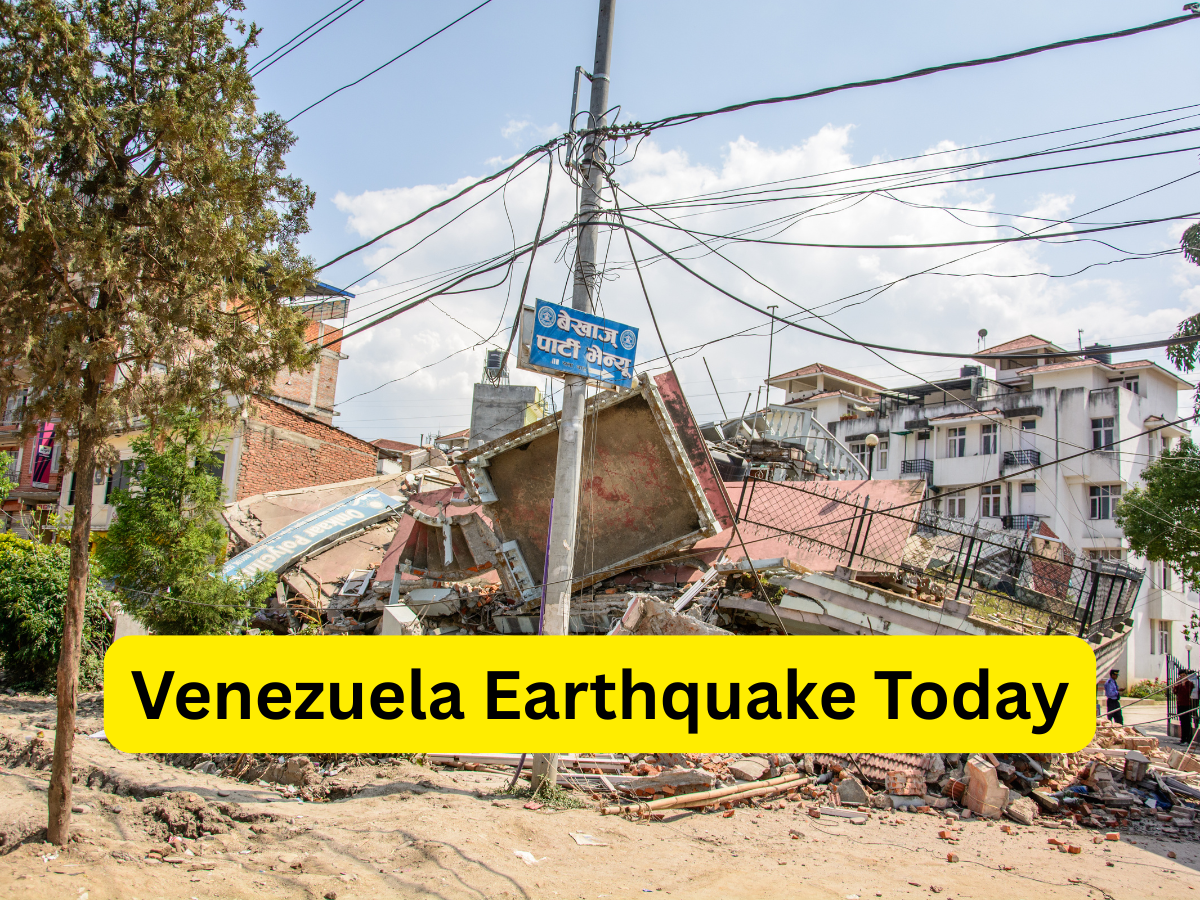

Venezuela Earthquake Today: The earthquake in Venezuela triggered panic in many areas throughout the region, including Eastern Caribbean countries. There were two separate earthquakes just minutes apart. Both were around 7.5 & 7.2 magnitude, which are amongst the largest earthquakes ever recorded in the region. There have been mass evacuation and rescue efforts initiated by governments as they develop the numbers of injured and the amount of damage done.
The earthquakes themselves occurred approximately 15 minutes apart from each other. both of which registered very strong vibrations in the earth across most of the northern half of Venezuela as well as parts of neighbouring countries, thereby sparking emergency response planning, including evacuations to shelters.
The earthquake (7.5 magnitude) occurred after the first earthquake (7.2 magnitude) observed. After that time, there were a large number of aftershocks which created increased concern about unsafe buildings and endangered the safety of the public.
Yes, there were two separate seismic events. Both earthquakes were confirmed by seismologists to have occurred as a result of geological reasons, and both earthquakes were confirmed to have also triggered a series of aftershocks. As both earthquakes produced a severe amount of energy and the one occurred 15/20 minutes after the first, it resulted in a total of three.
The strongest quake’s epicentre was reported to be near San Felipe in Yaracuy state, some 32 kilometres from the city. The quake was shallow, meaning the shaking felt stronger on the surface and the risk of damage was higher.
The tremors were felt across the following:
Several buildings, roads, and public infrastructure facilities reportedly sustained damage.
As per the authorities’ confirmation statement, at least 164 people have died after the destructive earthquakes, and thousands more were injured. here with hospitals dealing with fractures, shock-related trauma injuries, and other problems linked to the quakes. Rescue teams keep moving through collapsed buildings, trying to find survivors, because there is still a chance.
Venezuela is near the boundary between the Caribbean Plate and the South American Plate. As these tectonic plates drift and rub against each other. the geological stress builds up and then gets released quickly, sort of abruptly, as earthquakes. In northern Venezuela, the risk is especially high, largely because of multiple active fault systems that keep doing their thing.
Yes, they do happen from time to time, due to that tectonic setting. Small tremors can be relatively frequent, but major events above magnitude 7.0 are much rarer, and when they occur they can bring serious destruction.
After the shaking, officials monitored sea-level shifts and what was happening along the coast. Emergency teams evaluated whether tsunami waves might reach nearby shorelines and parts of Caribbean islands. People living near the water were told to follow official guidance and to stay attentive for further updates.
Emergency responders, military personnel, and teams from international aid agencies have been sent to the zones that got hit. Search and rescue work is mainly on collapsed building areas, damaged neighbourhood zones, and the really important infrastructure parts. Temporary shelters, well, have also been put in place for people who had to leave their homes.
Initial assessments indicate:
Officials warn that damage estimates may rise as inspections continue.
Authorities urge residents to reach out to local emergency services and disaster management lines for rescue help, medical problems, or shelter information. Emergency contact details might differ a bit depending on the region, so people should stick to the official government notices.
As a result of the earthquakes that affected Venezuela, many nations around the world have stepped up to provide humanitarian help, rescue personnel, medical aid and other essentials. The international response to the earthquake has been critical as first-responders search for victims in remote and highly populated areas.
Iran has offered humanitarian aid, supplies, and technical assistance to support efforts of recovery and restoration to the areas impacted by the earthquake.
A specialised search and rescue team from the Netherlands has been sent to Venezuela to help local authorities locate victims, assess damage, and assist in the response phase of recovery.
Many governments and non-profit organisations have expressed their support for the people of Venezuela following the earthquakes and are providing international assistance in the form of search and rescue aid, medical care, food, temporary shelter, and expertise related to disaster recovery.
Rescue teams in Venezuela are being hindered in large part due to the conditions resulting from the earthquakes. Crews are dealing with blocked roads, collapsed buildings, lack of electricity, interruptions in communication, and aftershocks all slowing down efforts to access the hardest-hit areas.
Officials are still tallying the number of people who have been displaced by the Venezuela earthquake. Thousands of residents may need temporary housing while officials check damaged homes and public buildings for safety.
The twin 7.5 and 7.2 magnitude earthquakes near San Felipe have turned into one of the deadliest seismic disasters in Venezuela in recent years. The death toll is 164, and rescue operations are still underway, but authorities are focusing on saving lives, restoring essential services and determining the full extent of the damage.
Disclaimer: Information is based on preliminary reports and official updates. Casualty figures, damage assessments, and rescue efforts may change.