June 20, 2026 11:39 pm Asia/KolkataIST, Updated 4 months ago
Ebola is a very severe & serious disease which is often a deadly viral disease. This Ebola disease may strike humans and also other primates. Earlier, this Ebola disease was first spotted in 1976 close to the Ebola River. This river is now known as the Democratic Republic of the Congo. The illness has been linked to several outbreaks, mostly in Africa. Ebola outbreaks can move fast through neighbourhoods where healthcare options are scarce. So early recognition and containment really become critical.
What Is Ebola Disease?
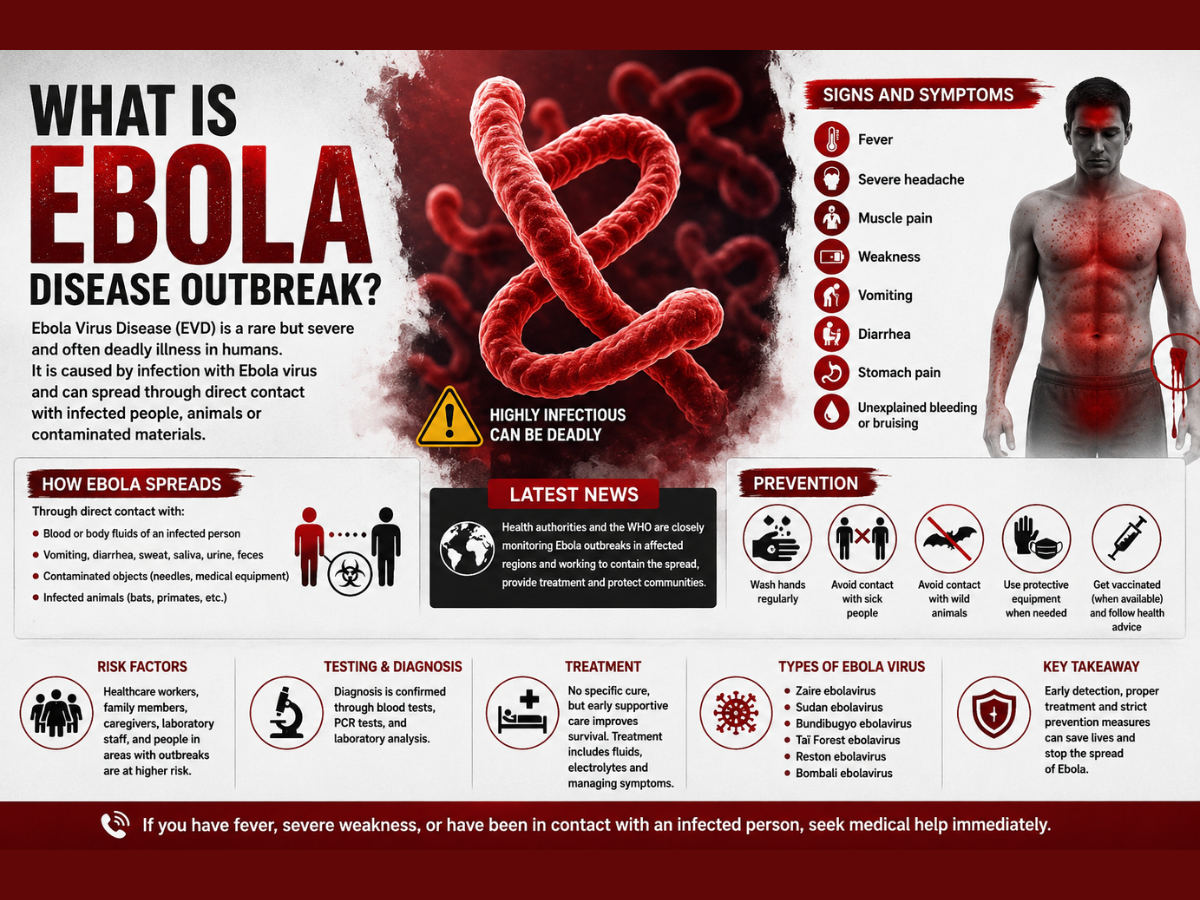
Ebola virus disease, or EVD, was earlier called Ebola haemorrhagic fever, and it is a dangerous condition caused by infection with viruses in the Ebolavirus genus. This illness tends to hit multiple organs. Without prompt medical care, it can cause heavy bleeding, organ failure, and death.
Where the virus “comes from” is often described as being connected to fruit bats, and it may pass from animals to people first. After that, it can spread person to person through direct contact with infectious body fluids, which is why safe handling matters a lot.
Ebola Outbreak: Latest News
In recent times, concerns around Ebola have mostly centred on surveillance and preparedness in African nations where outbreaks happened before. Health bodies, including the World Health Organization, keep watching for new cases and also try to reinforce fast response services to reduce the chance of broad spread.
but, it doesn’t has a major global Ebola pandemic is currently underway, public health experts remain vigilant due to the virus’s high fatality rate and potential for localized outbreaks.
What Happens If You Have Ebola?
After exposure to the virus, symptoms usually show up between 2 and 21 days later, but it can feel like it happens sooner or later, depending a bit on the person.
The disease often starts very suddenly with
High fever
Severe weakness,
Headache
Muscle pain
Then as the illness moves along, some patients develop vomiting, diarrhoea, and dehydration. while, in the worst situations, internal as well as external bleeding occurs. If medical help is not given in time, Ebola may cause shock, multiple organ failure, and then death.
Types of Ebola Virus
As of now, reports by researchers have identified multiple Ebola virus species. Also, they do have slightly different patterns in each variant.
Zaire ebolavirus – linked to the most lethal outbreaks
Sudan ebolavirus – tends to cause outbreaks mainly in East Africa
Bundibugyo ebolavirus – rarer but still able to trigger serious disease
Taï Forest ebolavirus – uncommon in humans
Reston ebolavirus – mostly seen in animals, and it has not been tied to severe human illness
Bombali ebolavirus – detected in bats; human disease has not been confirmed
Signs and Symptoms
Early Symptoms
Fever
Chills
Fatigue
Headache
Muscle and joint pain
Sore throat
Advanced Symptoms
Vomiting
Severe diarrhea
Stomach pain
Skin rash
Red eyes
Bleeding or bruising that has no clear explanation
Breathing difficulty
Kidney and liver dysfunction
Symptoms can get worse quickly, so immediate medical attention is important.
Risk Factors
People with higher risk include the following:
Healthcare workers who care for people with Ebola
Family members of infected individuals
Lab staff working with infected samples
People involved in burial rituals where there is contact with the deceased
Individuals who have recently traveled to areas with active outbreaks
How Ebola Spreads
Unlike influenza or COVID-19, Ebola does not spread through the air.
The virus is spread by direct contact with:
Blood affected by disease
Saliva, sweat, urine, vomitus or faeces
Semen, other body fluids
Used needles and medical appliances
Infected animals like bats or non-human primates
Ebola is only transmissible once a person is symptomatic.
Prevention
The best ways to prevent Ebola are the following:
Avoid Contact With Infected Persons.
Wash your hands often with soap and water.
You should use personal protective equipment (PPE) when caring for patients.
You can avoid contact with wild animals that might carry the virus.
You may notice safe burial practices.
It is one of the most important to get vaccinated when recommended during outbreaks.
Get medical attention immediately after suspected exposure.
Testing and Diagnosis
Doctors find Ebola through the following:
Exposure Assessment and Medical History
Clinical Examination
Blood work
Polymerase Chain Reaction (PCR) Test
Antigen detection assays
Laboratory confirmation is necessary as early symptoms are similar to those of malaria, typhoid and other infections.
Treatment
There is no easy cure for Ebola, but early treatment can greatly increase chances of survival.
The treatment includes:
IV fluids (intravenous fluids)
Replacement of electrolytes
Oxygen therapy
Blood pressure support
Management of secondary infections
Antiviral medicines licensed for some species of Ebola virus
Intensive supportive therapy
In recent years, several vaccines and antibody treatments have improved outcomes and helped control outbreaks.
Ebola is still one of the world’s most dangerous infectious diseases. Whereas if you know advances in vaccines and treatments. Whereas outbreak responses have dramatically improved survival and containment efforts. Early diagnosis, supportive care and strict infection-control measures are essential to prevent viral spread and to reduce fatalities.
Disclaimer: This information is for educational purposes only. However, you are required to consult a healthcare professional for personalised advice.