

Written By: S Kumar
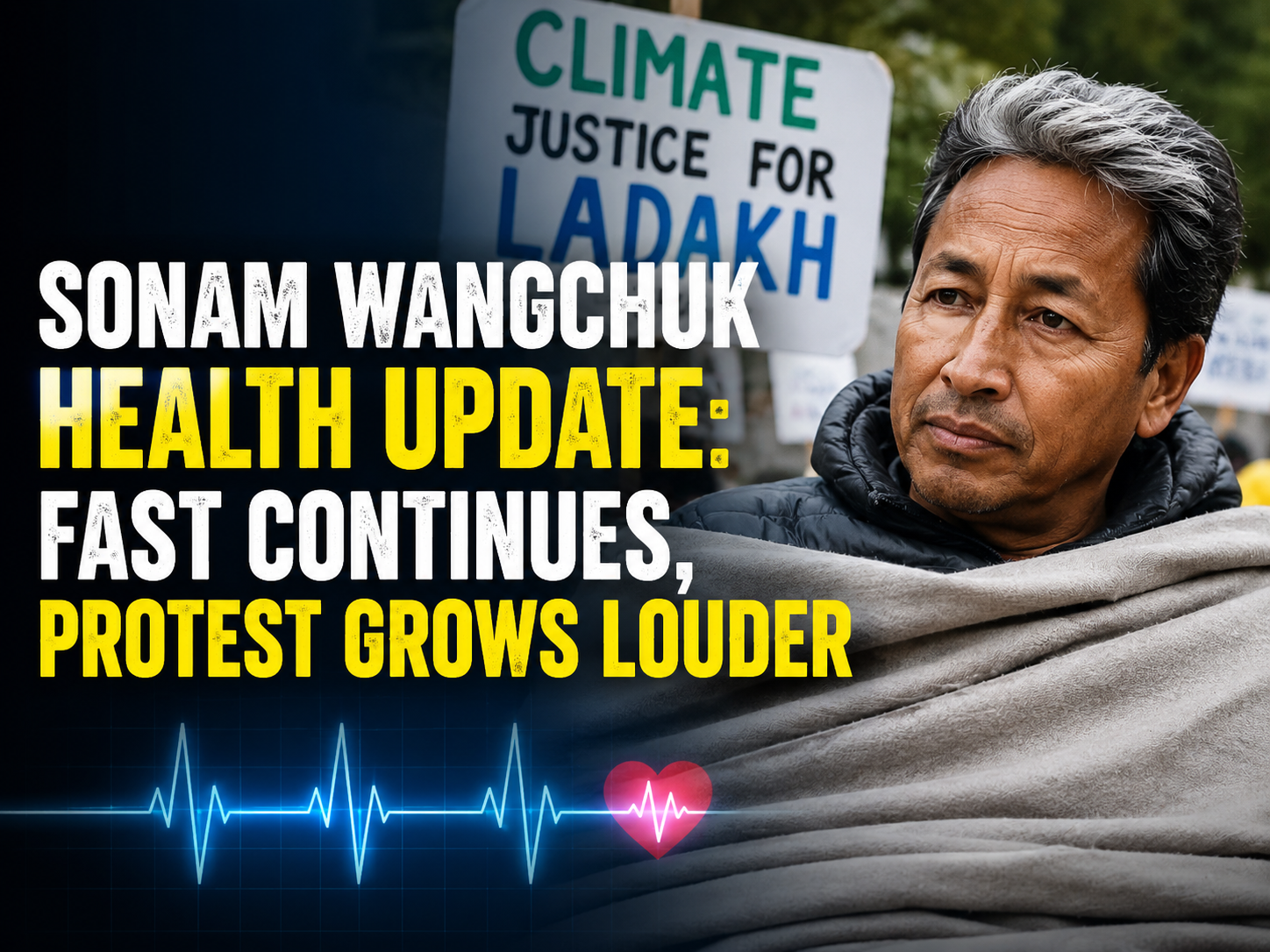
The very well-known environmentalist, education reformer and scientist Sonam Wangchuk has remained at the centre of national attention. As you know, he’s continuing his hunger strike in support of demands related to Ladakh’s constitutional safeguards and environmental protection. Whereas he has prolonged fasting, which has raised concerns about his health. This may prompt doctors to closely monitor his condition; however, supporters continue demonstrations at Delhi’s Jantar Mantar.
But again, the only questions grow over whether Wangchuk has ended his fast, his current health status, and the future of the protest. Here is everything you need to know about the latest developments.
As of the current scenario, Sonam Wangchuk has not stopped his hunger strike yet. The activist keeps up the fast, all while talking again and again about what he wants: stronger constitutional protections for Ladakh, along with safeguards for the region’s fragile ecology, its culture, and also the people living there.
This hunger strike has now slid past 20 days, and that makes it one of the lengthier phases of his ongoing campaign. Wangchuk has said more than once that this protest is meant to pull the government’s attention towards the concerns tied to Ladakh, especially after its transition into a Union Territory.
Supporters still keep showing up at the protest areas, asking the Centre to begin a dialogue with Ladakh’s representatives, like, not later but sooner.
Sonam Wangchuk started the hunger strike so he could press for several issues that have been there for a long time about what happens to Ladakh next.
The main points he has been pushing include:
Wangchuk has kept insisting that quick development without proper environmental safeguards could end up causing permanent harm to Ladakh’s unique ecosystem. He has also asked for wider conversations that include local communities, before big policy decisions get locked in.
His effort has also gathered backing from a mix of civil society groups, environmental activists, students, and residents from Ladakh.
The prolonged fast has naturally raised concerns about Wangchuk health, and it has become a bit hard to ignore.
Based on updates from doctors, he has shown expected physical weakness linked with an extended hunger strike. Medical teams have been keeping track of his vital signs, and doing blood tests now and then to understand his condition, step by step.
While doctors have said signs and needs close observation, Wangchuk has stayed alert and has continued to speak with supporters. Medical professionals have also stressed that a prolonged fast can meaningfully disturb the body metabolism, shift electrolyte balance, and weigh on overall organ function, so continuous monitoring is critical for now, not later.
His supporters have asked for his well-being to be treated as a top priority; they also insist the protest stays peaceful and orderly, as it has been.
After concerns about his deteriorating condition, Sonam Wangchuk was moved to Safdarjung Hospital for medical assessment.
Hospital officials said doctors carried out thorough checks, including blood investigations and routine health evaluations. As per the medical update, Wangchuk’s blood parameters, along with other key health markers, were being closely observed to judge how the prolonged fast is affecting him.
Doctors added that extended fasting brings rising risks like dehydration, nutritional shortfalls, muscle loss, and possible complications involving multiple organs if the fast goes on for a longer span.
Hospital authorities, for their part, have continued monitoring his condition while providing proper medical supervision.
The protest at Jantar Mantar continues to be the main point of Wangchuk’s campaign, with supporters showing up and keeping the demonstration going.
Supporters, environmental groups, student organisations and activists keep showing up at the protest place. here asking the government to finally sit down in a proper way with Ladakh’s representatives.
People there have been doing peaceful demonstrations, plus public meetings and a sort of awareness push, where they underline things like environmental conservation, climate change, sustainable development and even constitutional safeguards for Ladakh.
So far the protests have stayed mostly calm, and organisers have been urging supporters again and again to keep it non-violent throughout the campaign.
As his health started to become a bigger worry, Sonam Wangchuk was shifted to hospital after finishing nearly 20 days of fasting.
The checkup happened as a precaution, because reports kept coming in about him feeling weaker during the long protest.
Doctors carried out a physical assessment with several diagnostic tests before moving ahead with medical observation. Even after the hospital visit, the wider movement backing Ladakh’s demands hasn’t paused. Volunteers and supporters are still holding demonstrations at Jantar Mantar and also showing support in different parts of India.
The hospital trip highlighted how risky prolonged hunger strikes can be, while Wangchuk said he is still determined to raise attention about Ladakh’s concerns.
Now everyone is diverted on whether fresh talks between the government and Ladakh’s representatives can help ease the deadlock that is still ongoing.
Supporters hope that the negotiations could somehow touch the main demands around constitutional safeguards, environmental protection, and local governance. At the same time, medical experts keep warning that every extra day of prolonged fasting adds bigger health risks and needs careful supervision, period.
For now, Sonam Wangchuk’s hunger strike is still treated like both a political and humanitarian matter, drawing broad public attention. Even as his supporters carry on with peaceful protests at Jantar Mantar, doctors are staying busy with monitoring his health, and many people are simply waiting for him to be better than before & also about possible talks that might end the protest.