
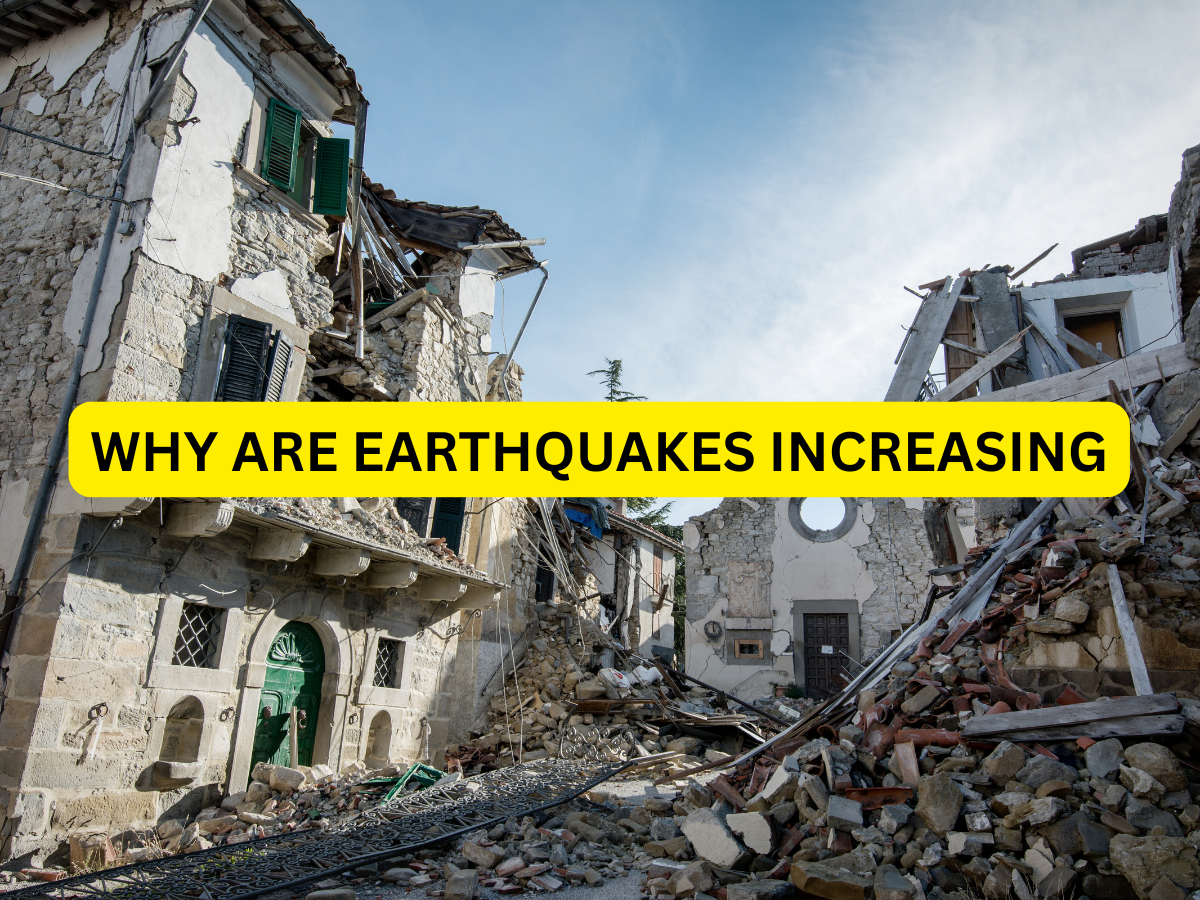

Earthquakes aren’t really “new” or suddenly showing up in huge numbers all over the world, at least not in the simple way people often say. Still, a few scientific and observational things are making them look like they’re more frequent this year. Here’s a kind of clear, but not too complicated, look at the main causes behind the recent pattern of seismic activity.
Due to a few earthquakes, mainly happening, Earth’s crust is divided into large tectonic plates that constantly move.
When these plates collide, slide, or pull apart, pressure builds up. But this stress may exceed the strength of rocks; it is released as seismic energy. This may cause an earthquake.
Areas close to plate boundaries, like the Pacific Ring of Fire, keep getting small-to-medium quakes because the plates are constantly doing their thing.
One big reason it can look like “more quakes” is that detection has improved a lot.
Today’s seismic monitoring networks, satellites, and even AI-based systems can spot very small earthquakes that older instruments often missed. So the count rises, even when the underlying natural rate hasn’t changed all that dramatically
Yes, most of the big global earthquakes come from the Pacific Ring of Fire, sort of a horseshoe-shaped belt around the Pacific Ocean.
In that area you find places like Japan, Indonesia, the Philippines and also parts of the Americas. Because several tectonic plates keep interacting, it ends up being one of the Earth’s most active seismic belts, really.
After a major quake, the crust keeps sort of readjusting and releasing the remaining strain. Those smaller tremors are aftershocks.
There can be hundreds of aftershocks over days or even weeks after just one major event. Hence, seismic activity feels nonstop in the places that were hit.
Climate change does not directly cause tectonic earthquakes. However, scientists are studying indirect effects such as the following:
These effects are still under research and not considered a primary cause of major earthquakes.
Earthquake swarms are like bunches of smaller to medium tremors that pop up close together, usually over a short span, and without that one big, clear main shock to grab the headline.
When this happens, people can end up feeling seismic activity as unusually frequent, kind of relentless for a while.
Worldwide, there isn’t really strong scientific proof that the total count of big earthquakes is climbing year after year in a dramatic way.
This makes earthquakes feel more common than in the past.
Earthquakes are a natural, ongoing geological process, most often caused by tectonic plate movement. What seems to be a sudden increase in frequency is really just better detection, aftershock activity and clustering of events in a region.