

Written By: S Kumar
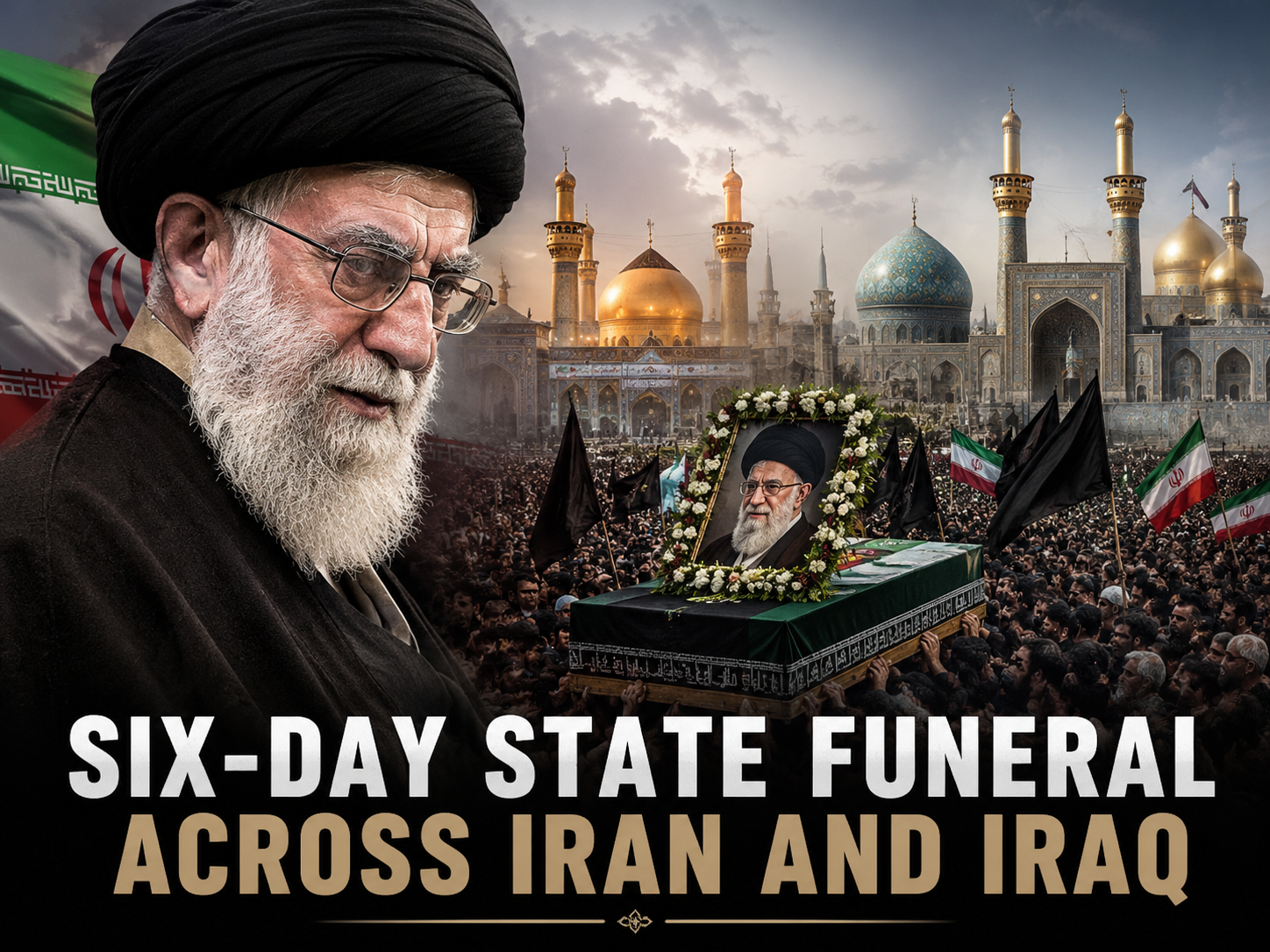
Ayatollah Ali Khamenei Funeral Latest Update: Iran will run a six-day state funeral for Ayatollah Ali Khamenei from July 4 to 9. This will happen across Iran and Iraq. The ceremonies arrive more than four months after Khamenei was killed on February 28. This was also the start day of the US-Israel-Iran war. It ended up being one of the more delayed state funerals in the Islamic Republic’s history.
Iranian authorities say it’s meant to offer Ayatollah Ali Khamenei a national plus regional goodbye. Hence, basically acknowledging his role and what he meant for Iran and for the wider Shiite Muslim community as well. But that long pause has already set off speculations.
Some analysts argue the timing could be connected to Iran’s leadership shift. Critics say the extra time used to set up bigger and more visible public gatherings after the US-Israel-Iran fighting. Tehran hasn’t given a clear, official reason, which leaves room for political, security, and logistical explanations to be debated.
Ayatollah Ali Khamenei funeral schedule: Tehran, Qom, Najaf, Karbala and Mashhad dates
As Iran’s semi-official Fars News Agency reports, the plan looks like this:
Officials expect large crowds throughout the week, with heightened security across all venues.
Iran has announced July 3 will be set aside for receiving foreign leaders, diplomats and also religious figures in Tehran, like a formal welcoming round.
If there is no official guest list, or at least nothing public has been shown, people expect representatives from nations. They keep close diplomatic ties with Iran, which will show up. Iraq’s senior officials, Shiite clerics and regional allies are likely to participate, which is the pattern of these events.
International media organisations have been invited to register for accreditation. This hints that the funeral arrangements will get global attention. Analysts said that the foreign attendance could also offer a small window into Iran’s diplomatic relationships. After the recent conflict, since you know these invitations are rarely random.
Iraq has confirmed funeral processions for Ayatollah Ali Khamenei. It will take place in Najaf and Karbala, two of the holiest places in Shiite Islam, in a symbolic sense.
The Popular Mobilisation Units, or PMU, say they have invited local and foreign journalists to cover the events. They are expected to attract thousands of mourners and religious leaders & political representatives.
The inclusion of Iraq highlights the close religious and political ties between Tehran and Baghdad while emphasising the significance of both cities within the Shiite world.
The last burial ceremony is planned for July 9 in Mashhad, in northeastern Iran.
Khamenei is expected to be buried at the Shrine of Imam Reza. This is among the holiest shrines in Shiite Islam and a place millions visit every year. Mashhad is also Khamenei’s birthplace; it becomes a very symbolic, final resting place, at least according to the narrative everyone is repeating.
After Khamenei’s death, people seemed to find more and more fault with the late Supreme Leader’s son Mojtaba Khamenei. Somehow, his name keeps popping up in conversations. After a long time, political analysts have declared that he could become the next successor, mostly due to his influence inside Iran’s political and religious networks. Even if the authorities have not made any official statement about succession, the delayed funeral has made a step in and led the Islamic Republic.
It is linked to religious geography. Although the decision to practise ceremonies across Iran and Iraq points to the special spiritual weight of Najaf and Karbala. These are widely considered among the holiest places for Shiite Muslims. As per the official’s requirement, by stretching the programme outside Iran’s borders, they seem to want followers across the wider region to pay their respects. Hence, at the same time, to underline Khamenei’s role and reach across the Shiite world. There is also this older political-religious link between Tehran and Baghdad. This gets highlighted again through these cross-border events.
The timing is a little difficult as Iran is trying to absorb the shock after the conflict with the US, Israel, and Iran itself. Supporters frame the long ceremonies as a proper, respectful tribute to the country’s longest-serving Supreme Leader. Critics, though, say the extended schedule could be used to strengthen internal solidarity. also to project political steadiness, rather than just honouring the dead. International observers are watching closely, especially Iran’s leadership transition, the regional diplomacy, and the wider security picture.
Ayatollah Ali Khamenei’s funeral is expected to turn out as one of the Middle East’s biggest geopolitical events this year. At least that’s what many people are saying. It will be held across Tehran, Qom, Najaf, Karbala and Mashhad. It looks like religious leaders, diplomats and ordinary mourners are expected to attend. Beyond honouring Khamenei in the usual way, these ceremonies are also being watched very carefully for clues. Hence, like signals about who will lead Iran next, what alliances might shift in the region, and what the post-war diplomatic tone will look like after all of this.
Iran’s six-day funeral for Ayatollah Ali Khamenei underscores a rather pivotal turning point for the country like a leadership transition, regional diplomacy and a post-war sort of future all at once.