

Written By: S Kumar
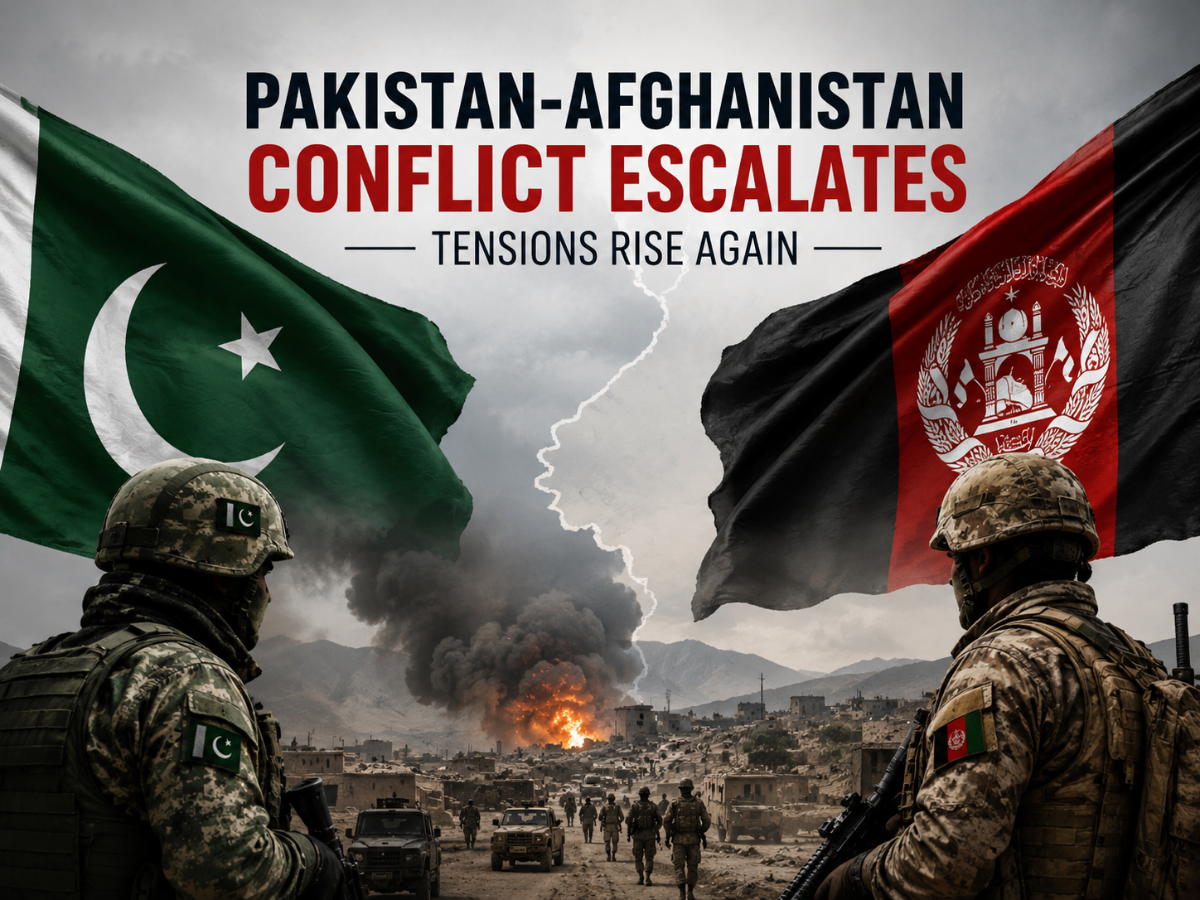
Pakistan-Afghanistan Conflict Latest News: The Pakistan-Afghanistan conflict is getting worse after Pakistan did overnight strikes inside Afghanistan. Islamabad insists it went after terrorist camps, meaning sites tied to militants it says were behind attacks in Pakistan. But then again, the Taliban say those strikes killed dozens of civilians, including women and kids.
This new wave of violence has basically pushed tensions between the neighbouring countries even further. Pakistan says the whole operation was meant to stop cross-border terrorism. Whereas the Taliban, on the other hand, say the attacks broke Afghanistan’s sovereignty, and they landed on civilian areas, not just military targets.
Pakistan says the strikes were a reply to recent terrorist attacks on its security forces. Islamabad claims its intelligence indicated militants were operating from safe havens just across the Afghan border.
This came after an attack on a Pakistan Rangers facility in Karachi. In that assault, three security personnel were killed.
Pakistan’s security forces did those overnight strikes in Afghanistan’s Paktia, Paktika and Kunar provinces. This led to being spoken about quite a bit. Pakistan says it managed to smash terrorist camps, weapons depots and militant hideouts. But the Taliban disputes it, saying instead that residential parts were hit as well, it led to civilian casualties plus property damage too.
Information Minister Attaullah Tarar said the military went after Jamaat-ul-Ahrar and also fighters Pakistan calls “Fitna al-Khwarij”.
Pakistan says at least 29 militants were killed. It also says several terrorist facilities and weapons stockpiles were destroyed. Officials insist the strikes were based on intelligence and were carefully planned.
The Taliban has outright rejected Pakistan’s claims.
Afghan officials say at least 36 people were killed and more than 160 were injured. While they add that many victims were women, children, and elderly civilians. According to the Taliban, homes in Paktia and Paktika provinces were struck during the operation.
The main dispute was around terrorism.
Pakistan accuses Afghanistan of giving a safe haven to the Tehreek-e-Taliban Pakistan (TTP). Islamabad replied the militants just cross the border to launch attacks from their side, inside Pakistan. The Taliban keeps denying that claim and says the Afghan soil is not being used against nearby states.
The Tehreek-e-Taliban Pakistan (TTP), or sometimes described as the Pakistani Taliban, is Pakistan’s most serious security worry.
The group came together in 2007. It has taken credit for a number of assaults on Pakistan’s military and police. Pakistan, meanwhile, says TTP fighters are operating from Afghanistan, and the Taliban keeps rejecting the accusation.
This recent rise in tensions came after an attack on Pakistan Rangers headquarters in Karachi.
Officials said a militant drove an explosives-filled vehicle and then detonated it before gunmen opened fire. Three Rangers personnel were killed, and four others were hurt. Jamaat-ul-Ahrar later stepped in and claimed responsibility. Pakistan then carried out cross-border strikes as a response.
The Durand Line is a 2,600-kilometre boundary separating Pakistan and Afghanistan.
Afghanistan has never officially recognised it. Pakistan treats it as an international border. The rugged landscape, plus those porous crossings, makes security harder. Militant groups often exploit those conditions because it’s just easier to move around.
The latest operation comes after months of rising tensions that kept building over time.
Earlier in 2026, Pakistan carried out airstrikes following deadly terror attacks inside the country. The Taliban hit back with cross-border raids. A few rounds of peace talks happened too, but they failed to lock in a lasting ceasefire, sadly.
Several countries are asking for restraint. China has urged both sides to move the crisis toward dialogue. Iran, Qatar, and Saudi Arabia have also appealed for diplomacy. Regional leaders are worried the fighting might intensify instability and turn into a humanitarian crisis.
Peace efforts have made limited headway, and that is putting it gently. Pakistan wants Afghanistan to dismantle militant safe havens. The Taliban has rejected the claim and says it does not harbour terrorists on Afghan soil. whereas it also fires back, accusing Pakistan of overstepping and breaching Afghan sovereignty. With trust at such a low level, an agreement keeps getting blocked, again and again.
Security experts say the whole situation is still fragile. Pakistan might launch additional cross-border operations if attacks continue inside its borders. while the Taliban could retaliate, which can be reverted to, how these cycles keep repeating. The only international mediation might still be able to lower the heat, but the chance of escalation is still high.
The fighting risks shaking stability across South and Central Asia. If clashes continue, trade could be disrupted and more refugees could start moving. As of now there’s also the fear that extremist groups could gain strength, and regional counterterrorism could become harder to coordinate or sustain.
The latest Pakistan-Afghanistan conflict highlights deep divisions over terrorism, border security and sovereignty. Pakistan says it is targeting militant threats. The Taliban says civilians are paying the price. Without stronger diplomacy and security cooperation, tensions are expected to continue.