

Written By: S Kumar
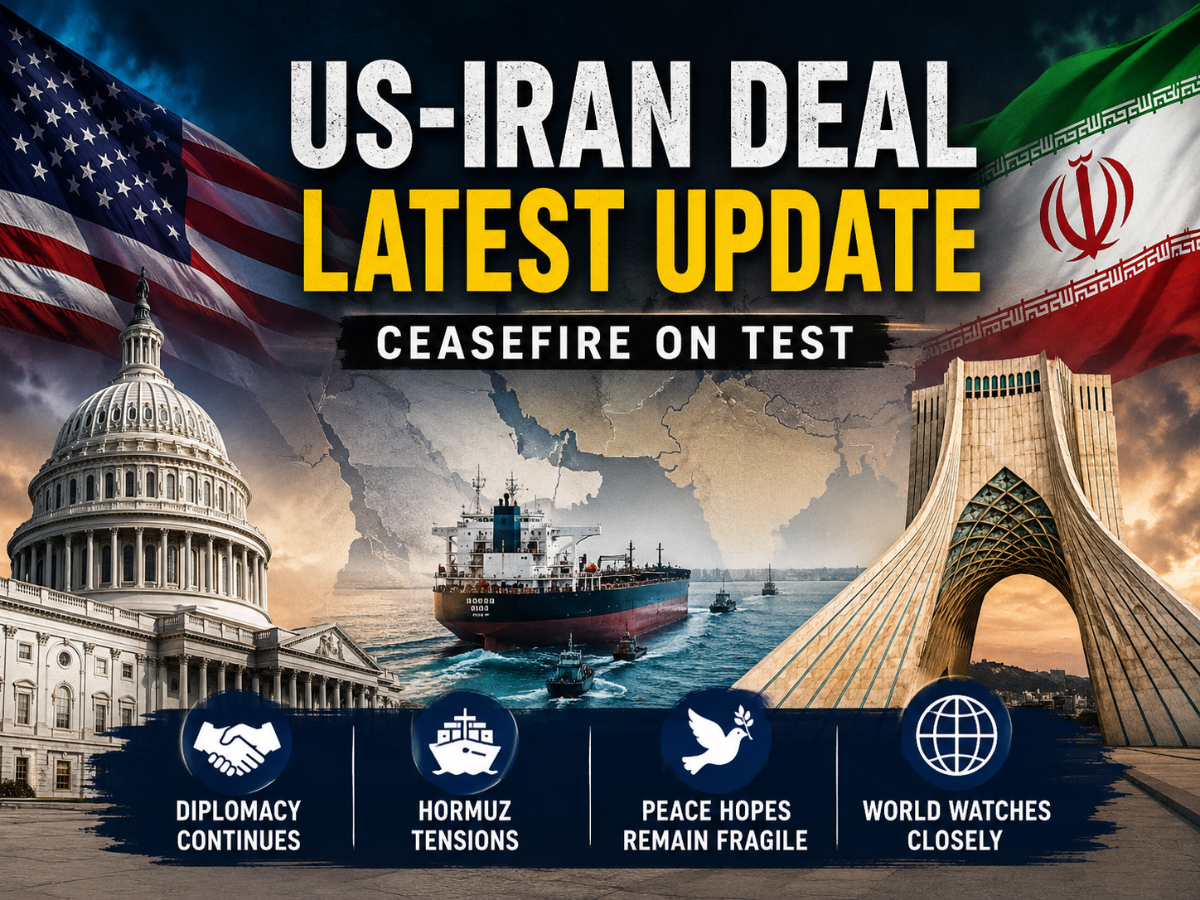
US-Iran Deal Latest Update: The US-Iran peace process has entered a crucial phase while diplomacy continues, but the fresh regional tensions keep bubbling under the surface. Even though the interim ceasefire is still technically in place, everything kind of keeps tugging at it like Israel-Lebanon talks, security concerns around the Strait of Hormuz, ongoing Gaza violence, and Europe’s energy worries. All of that together keeps testing whether any of this can turn into something durable.
According to the sources, the negotiators are working to turn the temporary ceasefire into a comprehensive peace agreement. This process will be within the agreed 60-day period. However, conflicting claims and ongoing regional conflicts continue to test the fragile deal.
One of the most significant breakthroughs tied to the US-Iran peace initiative is happening on the Israel-Lebanon track.
Negotiations in Washington were extended for a third consecutive day before mediators managed to lock in a preliminary framework agreement that is expected to be signed soon.
The proposed framework focuses on Israeli-controlled zones in southern Lebanon. This would be gradually handed over to the Lebanese Army under new security arrangements. Diplomats see the deal as a serious trial run for the broader US-Iran ceasefire. If this were held and implemented, it could build confidence for the wider regional peace process, as in more momentum.
Even with the ceasefire, tensions stay high around the Strait of Hormuz, one of the world’s busiest oil shipping corridors.
US President Donald Trump said Iran launched four one-way attack drones against commercial vessels moving through the strait, with one reportedly hitting a cargo ship while three others were stopped and intercepted.
Iran pushed back on claims that it had direct, day-to-day operational coordination with the United States regarding Hormuz. The Islamic Revolutionary Guard Corps, IRGC, brushed off reports that there is an established communication channel with Washington, stressing that the waterway is still under Iran’s authority. These competing statements, like the ones underlined, show how delicate the ceasefire is in atmosphere.
Even though it gets labelled by many as a peace deal, what is actually on the table is moreover an interim memorandum, not a final treaty.
The structure that’s been set lays out a path for talks that could last up to 60 days, focusing on Iran’s nuclear programme, sanctions relief, maritime safety, rebuilding efforts and longer-term regional stabilisation.
Third-party mediators, such as Qatar and Pakistan, are helping move the discussions forward. However, Switzerland remains a key meeting ground for negotiations. As per the officials, indicate there has been some movement. Also, they also say major disagreements remain and must be settled before anything durable can be finalised.
Diplomacy may have moved ahead, but violence is unfolding in multiple areas across the region.
Lebanon’s Health Ministry declares more than 4,200 people have been killed and over 12,000 injured since fighting intensified this year. Israeli officials insist that a military presence has to stay in parts of southern Lebanon. But even after Iranian calls for a full withdrawal, as if it were optional.
At the same time, Israeli strikes in Gaza keep going. A recent attack on al-Maghazi refugee camp reportedly killed three Palestinians. Even if the US-Iran agreement has reduced direct clashes, broader regional instability just doesn’t go away.
Oil markets have more or less stabilised now compared with the height of the conflict, but Europe is still uneasy about energy security.
As per the officials’ statement, jet fuel supplies might get tight later this year if disruptions continue or if the situation drifts. The European Commission says it’s monitoring fuel stockpiles and that it’s prepared to coordinate the release of national reserves if needed.
However, the Brent crude prices have fallen following the partial reopening of the Strait of Hormuz, whereas analysts warn that renewed tensions could quickly reverse those gains.
The talks do not stay only in Washington and Tehran.
Pakistan and Qatar have shown up as important mediators, while Switzerland continues hosting the discussions, on and off. Egypt, Turkey, and several European countries are also backing diplomatic efforts meant to stop another regional flare-up.
The interim agreement has already produced confidence-building steps, including limited sanctions relief. It also involves talks on commercial shipping and expanded nuclear negotiations. Diplomats hope that sustained international involvement will help narrow what’s left before the negotiation window that closes in a narrow timing.
Over the coming weeks, it will end up mattering a lot whether the current ceasefire turns into something that feels like a lasting peace agreement.
Negotiators are anticipated to finalise the Israel-Lebanon framework. Also, as they try to juggle several key crucial issues like the Strait of Hormuz, sanctions, nuclear inspections and regional security commitments.
If there is any fresh military escalation in Lebanon, Gaza or the Gulf, negotiations could get knocked off course. Even if the Lebanon agreement is implemented in practice and the diplomatic momentum keeps moving. Whereas the odds for long-term stability across the Middle East should improve quite a bit. As of now the ceasefire is still holding, but officials also admit it keeps running into daily problems, not in theory but in real life.
The US-Iran peace process has already shown some progress. However, the regional violence will not slow down, which is still there, plus wider security concerns. These next few weeks will decide whether we end up with real lasting peace or renewed tensions taking over again.